
How Modesto Neighbors Appear in Records
There is no open Modesto screen listing every person on a block. Start with an address, then its APN and legal description. Modesto GIS establishes lot order, the county property lookup may show publishable fields, and RecorderWorks connects parties to documents by name or document rather than street-wide bulk search.
These limits matter near a corner, rear lot, or multi-unit address. An owner result does not establish occupancy.
| Source | What It Shows About a Block | Access |
|---|---|---|
| Modesto GIS parcel and aerial layers | Parcel order, shape, structures, and jurisdiction | Free map after disclaimer |
| Stanislaus County Assessor | Publishable owner, value, APN, situs, and mailing | Web, counter, or subscription with privacy limits |
| RecorderWorks | Deed parties, dates, and legal descriptions | Name or document search, not street bulk search |
| California voter file | Registered voters and permitted fields | Application, fee, and use restrictions |
| Permit and code records | Projects, dates, participants, and cases by address | eTRAKiT, counter, or CPRA request |
| City neighborhood records | Association/watch contacts and public meetings | City page, Form Center, or CPRA |
Directories, newspapers, obituaries, and other historical sources can add dated names that parcel sources do not. They reflect an edition or event, not a current roster. Keep a dated APN file rather than claiming a person lives there now.
Mapping a Modesto Neighbor Block
The adjacent-parcel method uses the City of Modesto External GIS viewer. Accept the disclaimer, geocode the address, and turn on County Parcels Offline External, Master Addresses, and aerial imagery. Zoom to clear boundaries, identify the target, record its APN and jurisdiction, then click parcels left, right, and across the street. If several layers return, choose the parcel result and pan along the block.
The viewer also exposes zoning, districts, flood, census, business-license, development, and public-safety layers. Measure can define distance where enabled, but no public radius-owner report was verified. Note the date and active layers. GIS is a locator, not a title report or survey.
- Normalize house number, street, suffix, direction, and unit with Master Addresses.
- Record the target APN, situs, jurisdiction, and touching APNs.
- Compare available mailing or owner fields for each APN.
- Search each owner or legal description in RecorderWorks and verify the parcel.
- Use permits or neighborhood records only for their stated address and date range.
When the question expands to every address on a named street, use the Modesto by-street record walkthrough. Keep this workflow close to the target parcel.
One Modesto Parcel, Many Households
A parcel is land, not a headcount. One APN can serve a multi-unit building, accessory unit, or several situs and unit addresses. Situs identifies the land; mailing is where an assessment notice goes. A mailing match may support owner occupancy, but it can also be a PO box, management office, trust address, or protected field. Other household members ordinarily do not appear on a parcel roll.
RecorderWorks adds deed parties, recording date, document number, and legal description. A trust deed is financing, not an ownership transfer; a reconveyance releases security; a quitclaim can alter title without a conventional sale. Verify the APN and legal description before treating a similar name as a neighbor.
Reading rule. The safest wording is “the record associates this party with this parcel on this date,” not “this person lives here.”
Modesto Permit Clues Across a Block
Permit history helps compare physical change from parcel to parcel. Modesto Online Services routes researchers to Research Permit History and eTRAKiT. Depending on configuration, fields may include permit number, address, street, dates, type, or status. Results can show project, description, status, contractor, and inspections.
This can explain why adjoining parcels look different, but a permit is not a household record. An applicant or contractor may have a project role without living there. For incomplete results, Building Safety is the fallback at 1010 10th Street, Suite 3100, Modesto, 209-577-5232. Plans and applications can be submitted online or in person; most city payments carry a noted 2.4% card-service fee.
| Comparison | Useful clue | Do not infer |
|---|---|---|
| Permit by address | Work type, dates, project description, and inspection trail | That an applicant occupied the parcel |
| Code case by address | A complaint, case, or order where disclosure permits | That a complaint was proved or names every household member |
| Business-license layer | A business connected with a commercial address | That a proprietor lived at the address |
Modesto Voter Data Is Purpose-Limited
Myth: California My Voter Status is not a public directory of Modesto voters. It authenticates a person with name, birth date, and a California driver-license or ID number or last four Social Security digits when available. A result can show status, party preference, address fields, districts, polling place, ballot status, and participation history. Participation history shows a ballot was cast, not how anyone voted.
Block analysis requires an approved purpose and reviewed request. Elections Code sections 2188, 2194, and 18109, Government Code section 7924.000, and related regulations limit access and require certifications. A specific voter record is listed at $30, capped at $100; file charges and county procedures vary. Stanislaus Elections is at 1021 I Street, Suite 101, Modesto, 95354, 209-525-5200, 833-772-2260, fax 209-525-5802, stanvote@stancounty.com, 8 a.m. to 4 p.m.
The California My Voter Status form is for personal authentication. For a qualified file request, use the Secretary of State guidance. A no-match can reflect spelling, processing, a missing identifier, or cancellation. It does not prove someone left a Modesto address. Safe at Home participants and confidential voters are shielded.
There is no lawful anonymous screen showing every voter on a Modesto street. Treat voter data as a narrow civic record, not a parcel map or resident list.
Modesto Neighborhood Contacts and Watch
Geography: City and GIS materials recognize neighborhood and council-district geography, not a member directory. The research identifies College Area, La Loma, Enslen Park, Graceada Park, Downtown, and village-plan communities. These names can frame a block-history or civic question, but no official current master list was located confirming every association, boundary, membership directory, or contact.
Start with the city’s neighborhood materials, then check the Modesto Form Center for the Neighborhood Watch Group Application and official-document forms. A watch application organizes a group, not a roster. The City Clerk at Tenth Street Place, 1010 10th Street, keeps agendas, minutes, contracts, and administrative records. An Official Document Request should identify an existing record and delivery information.
| Local layer | What it can add | Privacy boundary |
|---|---|---|
| College Area, La Loma, Enslen Park | Neighborhood geography and context | Not a resident or member roster |
| Graceada Park and Downtown | Historic and civic setting | Does not identify every household |
| Village-plan communities | Planning and growth context | Does not prove membership |
| HOA or private association | Entity and agent clues through California SOS filings | Membership rosters are ordinarily private |
Secretary of State filings can identify an HOA or association entity and agent, but not members or occupants. Congregations, clubs, and watch groups may share historical rosters with consent. Contemporary name scraping defeats the privacy purpose of these records.
Modesto CPRA for Block Records
When a portal does not expose a record, the California Public Records Act provides a request path. Under Government Code sections 7920.000 et seq., describe an identifiable record, department, address or APN, and date range. An agency need not answer a broad question or create a resident list. It generally determines disclosability within 10 calendar days, with a possible 14-day extension. Inspection is ordinarily free; copies may cost direct duplication.
For city material, begin with the keeping department or official-document form. A request might seek a permit history, meeting record, or watch application by date. CPRA does not override court, vital, DMV, voter, juvenile, adoption, law-enforcement, or constitutional privacy rules.
For a visual guide, see the California Attorney General’s CPRA guide before viewing the image below.
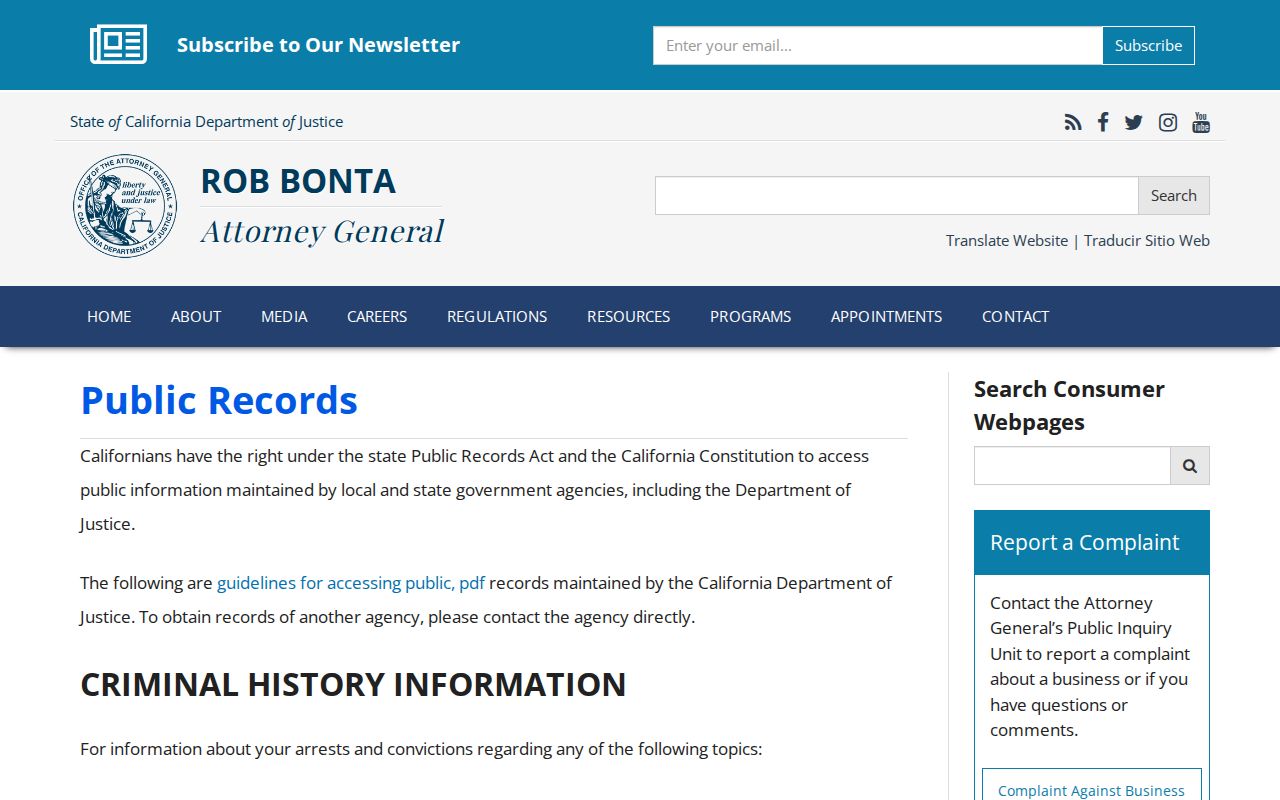
Keep the response with its date range and note any exemption or redaction. A withheld address may be protected by law.
Historic Modesto Neighborhood Context
Historic context can explain a block without naming present-day neighbors. Graceada Park, Enslen Park, College Area, La Loma, Downtown, and village-growth areas have different record trails. Older fabric suits directories, Sanborn research, newspapers, and permits. Newer edges are more likely in subdivision maps, permits, annexation files, and planning layers. Modesto GIS features are geography sources, not member directories.
Postal Modesto in 95357 or 95358 can fall outside city jurisdiction. The 1974 Urban Growth Policy and Measures A and M shaped sewer-extension and advisory-election geography, but approval did not necessarily mean annexation or development. Compare GIS Jurisdictions, sphere-of-influence, and development layers before calling an adjacent parcel a city record.
For older names, the Stanislaus Room at the Modesto Library and the Genealogical Society of Stanislaus County provide channels for directories, telephone books, yearbooks, newspapers, obituaries, church materials, and local histories. Catalog absence is not proof of loss. Keep history separate from a present-neighbor claim.
Check Modesto Neighbor Claims Carefully
Official rolls are narrow but traceable. Commercial neighbor tools may combine deeds, assessment data, purchased data, and old listings, then present an owner as an occupant or omit household members. Treat them as leads only after checking the APN, document date, permit address, and a lawful public source.
Be wary of mailers using an APN or recording reference to sell an expensive deed copy. Compare them with the Stanislaus County Clerk-Recorder’s fee schedule. Property-fraud alerts monitor recordings but do not block a filing or insure title, and no current official Stanislaus enrollment URL was confirmed. Search the California State Controller’s unclaimed-property site directly rather than paying an intermediary.
For internet fraud, use the FBI Internet Crime Complaint Center or the FTC ReportFraud form. An immediate threat belongs with emergency services. Save the source URL, date, APN, and message.
For a visual reference on internet-crime reporting, see the FBI IC3 source before the image below.
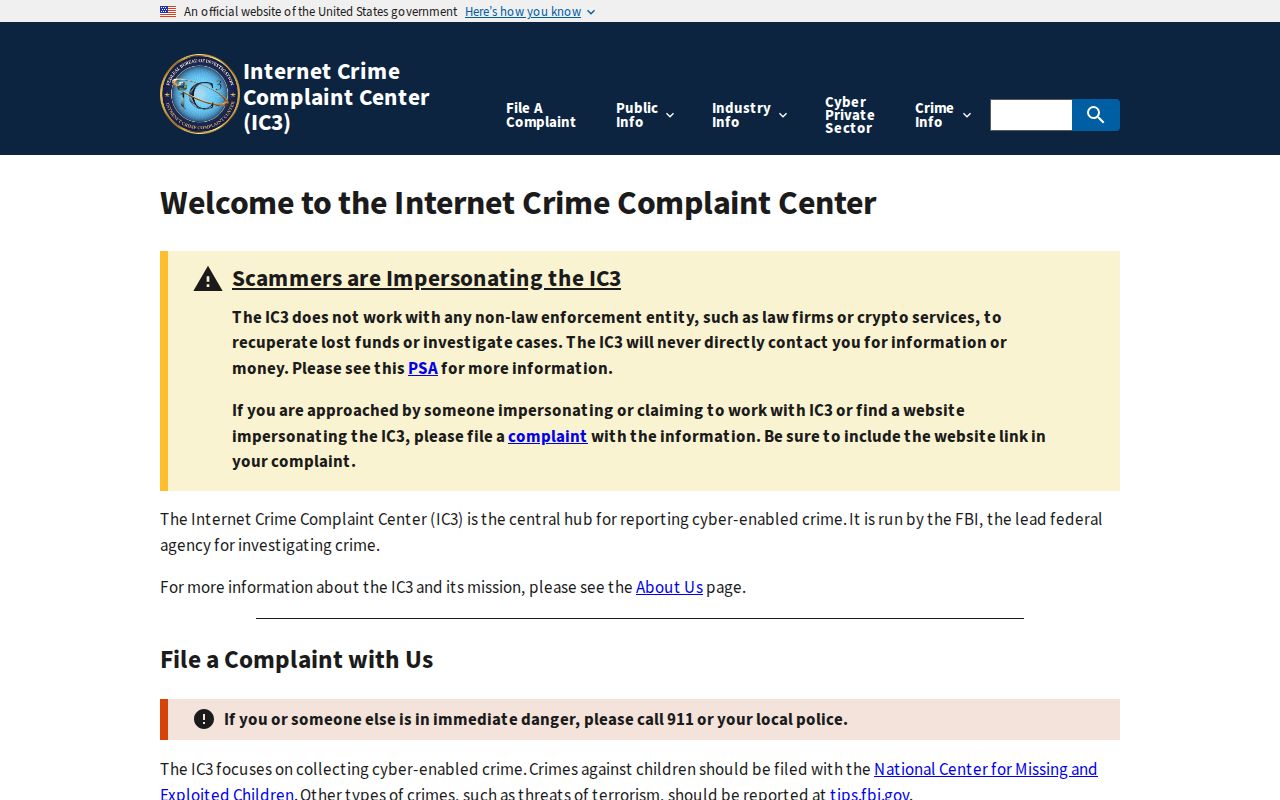
The FBI reference helps separate online fraud from an ordinary records mismatch.
For the federal consumer-fraud path, see the FTC ReportFraud source before the image below.
Keep reports factual. A neighbor lookup should support safety awareness, reconnecting, family history, or civic curiosity, not surveillance or intimidation.
Privacy Limits on Modesto Neighbors
California privacy rules leave gaps by design. Utilities and delivery services are not public customer directories. DMV data is restricted, parcel rolls omit household members, protected addresses may be suppressed, and confidential voter information cannot be republished. The California Consumer Privacy Act and California Privacy Rights Act provide covered consumers rights to know, delete, correct, limit certain sensitive-data use, and opt out of sale or sharing, subject to exceptions. These rights do not erase retained official records.
Safe at Home supplies a substitute mailing address and forwarding for qualifying survivors and specified people who fear for safety. Treat suppressed fields as intentional protection. If a source is wrong, contact its custodian: Assessor, Recorder, Elections, court, or vital-record office.
Lawful use. Modesto neighbor research is appropriate for getting to know a block, reconnecting, family history, civic use, and personal safety awareness. Never use an address or identity record to stalk, harass, threaten, or harm anyone.
For court questions, California’s case lookup guidance explains why remote access can differ from the courthouse. Court, family, juvenile, adoption, and other protected records are not unrestricted neighbor sources.
Use the California court access guide when a result needs a careful check before the image below.
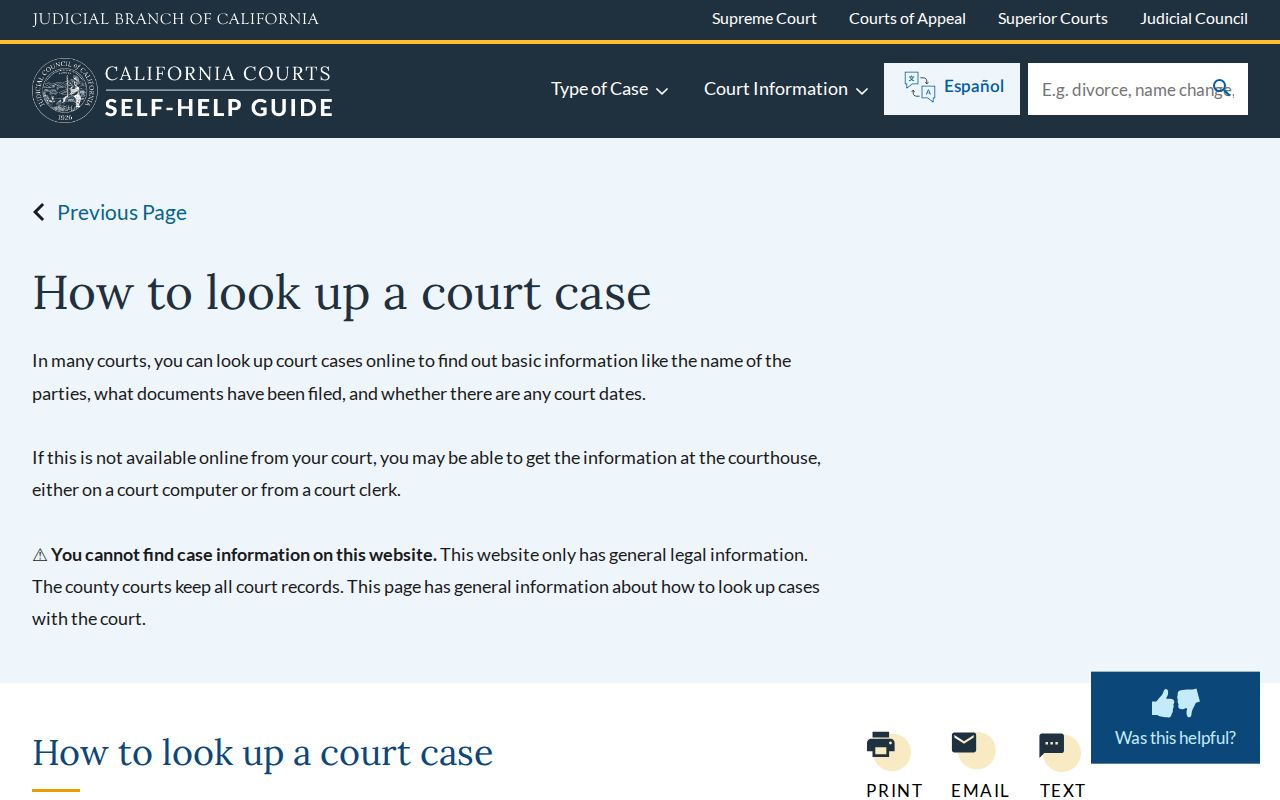
The court guide reinforces the same rule as the parcel map: a public result has a scope, date, and access limit, and identity still requires careful corroboration.